Saturday, October 17, 2020

The Prodigal Father


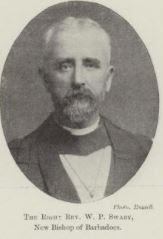
St. Mark’s Church was built in the early 1870s in Sunderland’s Millfield section, a growing working-class area. The Rev. William Proctor Swaby came to the vicarage in 1881. Swaby’s story was interesting. He was raised by his mother, helping to support her by being a teacher in Tetney, their village in Lincolnshire. He went to university in Durham where he was a leading athlete and scholar and, finishing his studies, was ordained in 1871. His first parish was in the mining community of Ryhope. Since coming to Sunderland, Swaby was credited with establishing St. Mark’s as a “model parish.” He served on the Sunderland School Board and oversaw the Boys and Girls High Schools. He was a gifted preacher and much in demand. His sermons were published. His income amounted to about £800. So, why was his father on the dole?


In 1891, Rev. Swaby received a summons from the Shardlow Board of Guardians in Derbyshire asking why he should not contribute to the maintenance of his 70-year old father who was presently receiving outdoor relief in the village of Long Eaton. The vicar replied by mail declining the summons. He was, firstly, not satisfied the man called Joseph Swaby was his father. And, even if he was, why should he have to support a man who abandoned him as a child, leaving three boys and their mother? For more than 40 years, William had supported himself and his mother “without the least assistance” from his missing father.

This “remarkable and romantic story” received a good deal of attention. The Rev. Swaby, of course, would have to come to Derby County Hall to confront the guardians. He was the last of his family, as far as he knew. Both his brothers were dead. His mother was dead and she'd always told him that his father died of the cholera in 1846. Until this summons, Swaby had no reason to believe otherwise and had made no effort to find his pater. 

At the hearing, an elderly Tetney man swore to Joseph Swaby’s identity. Then, the prodigal father took the stand. He was born in Tetney, trained as a joiner. In 1846, he went to Grimsby to find work. He never returned. His wife, Rebecca, “preferred” another man, so he left her with him. For a while, he followed his son’s clerical career but had lost touch. Then, he saw a newspaper report about a sermon given by a Rev. Swaby in Tetney and he knew that had to be his son. When a guardian challenged him for not making any effort to contact his son or family for more than forty years, Swaby answered, “It doesn’t matter now.”

The elder Swaby, the guardians also learned, had re-married; his second wife was only in her 30s, and they had three children! While his step-mother et al were not the Rev. Swaby’s concern, his father was, the board decided. The clergyman would have to contribute 1 shilling, sixpence per week (less than £4 per year.) The guardians wanted to make clear that they did not hold the Rev. Swaby responsible in any way for his father’s plight. “There never was a prosecution in which the accused succeeded more effectually in clearing himself from unworthy aspersions.”

There was no happy family reunion. The Rev. Swaby returned to Sunderland, sending his weekly payments. In 1893, he left England, accepting the appointment as Colonial Bishop of British Guiana. In Derbyshire, the public was informed that “the Bishop will continue to contribute weekly towards his father’s support.” How long the payments continued cannot be known but Joseph Swaby lived another 15 years. The Rev. Swaby remained abroad; he died in 1916 soon after being appointed Archbishop of the West Indies. 

How the Vicar Came and Went is the new collection of Victorian Clerical Errors and is available exclusively from amazon.co.uk.  

Rev. Swaby's photo copyright The Bridgeman Collection.
 

Saturday, September 26, 2020

The Foote Business.

All Saints, Clevedon

There were numerous feuds between Victorian vicars and squires but few led to as much litigation as "the Foote business." The Rev. John Vicars Foote (sometimes Foot) arrived in East Clevedon in 1886 to be the new vicar of All Saints church. Nearby, at the old and splendid Clevedon Court, lived Sir Edmund Elton, a church patron and wealthy baronet who is more famous today as an inventor and pottery artist. All was pleasant at first; in fact, in 1888, the Rev. Foote married Sir Edmund's niece. The honeymoon couple left on a lengthy European tour. In their absence, everything went sideways.

While Foote was away, his curate, the Rev. Frazer officiated. The story is that the Eltons took well to Mr. Frazer in their pulpit. So much so that, on his return, Foote felt slighted. Soon, he sent a letter to Sir Edmond saying Mr. Frazer was a "confirmed drunkard" and given the sack. Sir Edmund gave that letter to Frazer who sued Rev. Foote for libel and won £300! The case was heard nearby at the Bristol Assizes and Rev. Foote believed that "Elton influence" had been employed against him. 

Meanwhile, a new curate arrived in Clevedon, the Rev. Samuel Church. When first offered the job, he'd heard about "the Foote business" and wrote to Sir Edmond. He received a letter from Clevedon Court suggesting that if the truth were to come out, it would be very unpleasant for the Rev. Foote. Sir Edmond added, "I could not conscientiously do anything that could possibly imply approval of Mr. Foote’s course of action.”

It was the vicar's turn to sue Sir Edmund, this time in London. Foote said he had been persecuted for more than a year. Sir Edmond's libelous letter contained a grievous imputation against him and was written with malicious intent. In the witness box, Foote admitted threatening to "excommunicate" both Sir Edmond and Lady Elton. He spurned her charitable gifts to the church. He told others about a "scandalous incident" in Sir Edmond's past, which turned out to be an occasion when Sir Edmond got in a railway carriage scuffle with a smoker. The jury took less than an hour to find a verdict for Sir Edmond.

Within minutes, Justice Hawkins called a second case: the Rev. Foote had also sued the Rev. Robert Lawson, the former vicar of East Clevedon for slander. Lawson had told prospective curate Church that, "Foote is a contemptible cad and blackguard whom neither Sir Edmond or Lady Elton would touch with the end of a barge pole." Lawson, on the stand, said he regretted the barge pole comment, calling it stronger language than was required, but it was substantively true. Lawson's counsel - who was paid for by (wait for it) Sir Edmond, argued that the comment was not directed at Mr. Foote, the clergyman, but Mr. Foote, the person, and the jury quickly agreed.

At Clevedon station, a large crowd was waiting to cheer the returning Rev. Lawson and Sir Edmond. "Scores of willing hands" pulled the baronet's carriage to Clevedon Court.

The Rev Foote remained in Clevedon, achieving some (temporary) rapprochement with the Eltons. He resigned in 1899 after a dispute with his Bishop over questions of ritual. Many years after the clergyman's death, with the 1994 publication of The Annals of the Elton Family, a writer contended: "Foote was a devious and unscrupulous character. Though eloquent and urbane, he was, unknown to his patrons, addicted to heroin."

How the Vicar Came and Went, a collection of Victorian clerical scandals and quarrels, is available exclusively at amazon.co.uk. 

Photo credit: Philip Halling / All Saints' Church, East Clevedon / CC BY-SA 2.0

Saturday, September 5, 2020

The Peeress and the Parson

Elvaston Castle (derbyshire.gov.uk}
Elvaston Castle, the Derbyshire seat of the Earls of Harrington, has been described as “perhaps the most remarkable place in England.” Charles Stanhope, the 4th Earl, succeeded his father in 1829. Charles was a "Regency buck" known for collecting snuff boxes. And actresses. In 1831, he married Maria Foote, a sometime stage performer and notorious courtesan. As the new countess would never be accepted in respectable society, Charles and Maria retreated behind their castle gates. 

The Earl permitted few visitors. He forbade his wife to leave the Castle. To amuse her, he expended a fortune on the Castle and grounds. On those grounds stood St. Bartholomew’s Church. In 1841, a new vicar arrived, the Rev. Frederick Nathaniel Highmore. Despite the "scandals," the young clergyman was not judgmental and soon won the affection of his patrons at the castle. The peer and parson got along famously. Rev and Mrs Highmore, the villagers said, enjoyed the castle's hospitality, i.e. lavish dinners and card parties, "rollicking times." It was, therefore, a sad day at the vicarage when the 4th Earl passed away in 1851. He left no legitimate male heir and the title passed to his brother, Leicester Stanhope. The 5th earl soon arrived with his wife, now the Countess Elizabeth, a “noted beauty" of London society. The new Earl and his wife, however, were of a very different mindset. They held strong temperance views. It soon became clear that the days of comity between church and castle had ended.

The Rev. Mr. Highmore actually left Elvaston for three years, ostensibly for his health. A succession of curates filled in, none of whom pleased the Castle. Upon Mr. Highmore’s return to Elvaston, there were new disagreements over plans to rehabilitate St. Bart’s church and how to run the village school. By 1857, the vicar was persona non grata at Elvaston Castle.  

About that time, the Rev. T.J. Jones, fresh from school, arrived to be Mr. Highmore’s newest curate. He was, of course, invited to the Castle for tea. The Countess was eager to hear him preach but she would only come to St. Bart’s if Mr. Jones was officiating. She confided in the young curate that the vicar was a “wicked fellow.” She knew what went on at the vicarage (Thurlaston Grange) and how they were “drunks rolling on the floor.” But Jones had dined at the Highmores and found them pleasant. The Countess answered: “If you go to those Highmores, you will not be welcomed at the Castle.” Jones relayed this to the vicar and the Rev. Highmore sued her Ladyship for slander.
The Vicarage (Thurlaston Grange) historicengland.org.uk

At the Derby Assizes in June 1857, the Rev Mr Jones recounted his meetings with the Countess. She told him that neither she nor her husband would take communion from the vicar because of his wickedness. "He is a low & vulgar fellow, a drunk, and he has encouraged card-playing, gambling & debauchery in the village." Jones was told that Highmore and his wife were “constantly rolling drunk on the floor.” She further accused Highmore of being "unduly familiar” with his female servants and "pocketing" money from the church restoration fund. 

In his turn, the Rev. Mr. Highmore told the jury that he had enjoyed a decade with the 4th Earl but ever since the arrival of the 5th, he'd been snubbed. In fact, he couldn't recall speaking a single word to the Countess. But she had spoken about him and it was time for her "persecution" to end. Under questioning from the defendant's counsel, Highmore admitted that he had taken a lengthy leave of absence from Elvaston for his health, endangered by the harsh Derbyshire winters. Pressed, he conceded that he once had an overfondness for “stimulating drink.” But he had been sober for seven years.  

The vicar admitted finding temporary curates was not easy and he removed the bad ones as soon as he could. As for his theft from the building fund, it was all over £10. With a crumbling tower and rising damp, he spent where it was needed most. His books were open to anyone for inspection. 

The public gallery was packed; folks eager to hear the Countess who did not deny her views on the vicar of Elvaston. Still, she insisted that Mr. Jones, an inexperienced cleric, had completely exaggerated her remarks. She never described the Highmores as “drunks rolling on the floor.” But one of the departed curates, an apparent dipsomaniac, had been seen in such a state. As for the vicar's "debauchery," she found his card playing to be very sinful and a horrible example in the village. Card-playing had not been allowed in the Castle since the late Earl’s death.

The Countess would also face cross-examination. She denied meddling in school affairs although she disapproved of the vicar's laissez-faire discipline. She did not shout down the schoolmistress, but thought the woman was a "virago." The most serious charge was that the Lady Harrington had spread gossip that Mr. Highmore “kept” a servant (Ellen Wilson) as his mistress, they regularly met for “bad purposes.” The Countess disavowed ever saying it, laying it at the feet of "her enemies."  

The jurymen quickly found for the Rev. Mr. Highmore and the Countess was ordered to pay £750. (£100,000 today!). She appealed claiming the damages were excessive. But Lord Chief Justice Cockburn (a bit of a lad, himself) turned her down: "Looking at the destructive and fatal tendency of the imputations cast upon the plaintiff as a clergyman and a gentleman, the damages are anything but excessive." Of course, the money would come from her husband, the 5th Earl, a quiet figure throughout it all. Poor chap; he was "one of the mildest and most benevolent men of our time." 

The Rev. Highmore remained in Elvaston until his death in 1873. His nemesis, the Countess, lost both her husband and her son in the 1860s and Elvaston Castle passed out of her branch of the family.  

Reminder: HOW THE VICAR CAME AND WENT is available exclusively from amazon.co.uk.

Saturday, August 15, 2020

Indecent Familiarities at St. Paul's Cray

 Archaeologia Cantiana 1889

In North Kent lies the small village of Paul's Cray; the ancient church of St. Paul, though now redundant, is picturesquely set along a little stream, "called by courtesy a river." It was never a large parish but, in the 1850s, the rectory was quite spacious. Residing therein were the Rev. Edmond Roberts, his wife Eliza Anne, their six living children, several servants and eight teenage boys, as the rector supplemented his income with a small school. To assist with the latter, 20-year old James Mowat, a young man preparing to go up to Cambridge was taken on as a teacher. Alas, Mr. Roberts soon had reason to believe that his wife of 17 years had formed a questionable attachment with young Mowat; in fact, their “indecent familiarities were the common talk of the servants.” 

In 1854, the first English Divorce Court was still a few years away. Thus, the Rev. Roberts appeared before the ecclesiastical tribunal, the Court of Arches, in Canterbury. Roberts told Sir John Dodson the signs of his wife's misconduct were everywhere. She had no interest in the school until Mowat came. Suddenly she took long walks in the country, arm in arm with the young tutor. Some of the boys claimed they saw them kissing. The butler reported finding Mrs. Roberts and Mowat in the locked library; the keyhole in the door was stuffed with paper. It must be said, however, the rector was not the most attentive husband, making long visits to Brighton and Ireland. In his absence, he got word that Mowat had moved into the dressing room adjacent to Mrs. Roberts' bedroom. Eliza Anne had a female companion but Roberts alleged that she was their confederate, leaving the two alone, passing their letters when apart and doing nothing when the two "by mistake" spent several nights at a lodging house in Bath where Mrs. Roberts posed as Mowat's cousin. On another occasion, Mrs. Roberts had been traced to London, staying in the same lodgings as Mowat. Confronted by the evidence, she blandly denied it. After the rector saw his wife boldly emerge from young Mowat's room, "the separation of the parties thereupon took place." 

Eliza Anne Roberts contradicted her husband's jealous obsessions. Mowat arrived in Cray in delicate health and spirits. Her husband had worked the youth quite hard; she felt it was her role to provide some tenderness. Mowat's father was a well-known Wesleyan minister and his son's plan to join the Anglican church had caused a family upheaval. She helped him through that, with long conversations and long walks - at doctor's orders. She denied the schoolboy gossip, the library story, and while together in Bath, they stayed in separate inns. There was medical evidence that she was occasionally erratic and confused about dates and places. She also insisted that she had slept with her husband for some time after he dated their separation which raised the question - had he condoned her misconduct?

The rector's counsel admitted there was no proof, no time or place, of the adultery but there was enough evidence of Mrs. Roberts' indecent familiarities that the court could infer that she "might" have done it. But her lawyers suggested it was quite improbable that a previously unimpeachable woman, twice Mowat's age, having borne nine children, could suddenly abandon herself in such fashion. The rector's evidence entirely failed to prove that any adultery had occurred.

The Arches judge took nearly a month to rule; he found enough evidence of "proximate acts" that if the opportunity had been afforded (in London, Bath or the rectory), adultery would have been committed. He granted the divorce; Mrs. Roberts' subsequent appeal was denied. 

The scandal in Cray forced the Rev. Roberts to resign and close his school. He became rector in Dorset (Wootton Glanville) but died a few months later. He was just 47. Mr. Mowat did go on to Cambridge and was ordained in 1860. After many years as a college don, The Rev. Mr. Mowat was married and served as rector of Handsworth in Yorkshire. Mowat did not marry Eliza Anne Roberts; she cannot be traced. 

My new collection of stories, HOW THE VICAR CAME AND WENT, is available now and exclusively at amazon.co.uk. 


Saturday, July 25, 2020

The Great Gloucestershire Hen Case

In a remote corner of the Cotswolds lie the twin villages of Eastleach Martin and Eastleach Turville. "Few places are less known," wrote the Rev. William Herbert Thomas Wright. The villages are divided by the narrow River Leach, spilling south to join the Thames at Lechlade. The Victorian population was barely 500 but there were two 13th century churches, one on each side of the river: St. Michael & St. Martin, Eastleach Martin (pictured) and St. Andrew's, Eastleach Turville. In 1888, the Rev. Mr. Wright was curate-in-charge of both, residing in Eastleach Martin. 

A great snow fell in the west of England that February. Village lads were hired to dig out roads and footpaths. 19-year old Jim Smith was trudging home when he found a black hen, all but frozen dead in a snowbank. He placed the bird inside his jacket and, when he reached the village, sold the revived bird to his friend, Richard Blackwell, for two shillings. If anyone claimed the hen, they would give it back. Meantime, as in the nursery rhyme, "Hickety-pickety, my black hen, she lays eggs for gentlemen. Sometimes nine, sometimes ten. Hickety-pickety, my black hen."

That May, Rev. Wright got information that Blackwell's hen might be his. He made enquiries and then went to Fairford to make a formal charge. Two constables arrived. Young Blackwell said he'd paid Jim Smith 2 bob for the hen. A nervous Smith "couldn't remember" but soon admitted "finding" the bird. On a Sunday morning, the police marched Blackwell and Smith to St. Michael & St. Martin where Rev. Wright was greeting his flock. Would he press charges? Yes, he would. Messrs. Smith and Blackwell were handcuffed in front of everyone and marched four miles to the nick. They were held for three days without visitors before being released to await the Quarter Sessions in July where the charges were dismissed. 

A year later, in the Queen's Bench, London, the young men sued Rev. Wright for false imprisonment and malicious prosecution. The curate insisted he acted reasonably and with probable cause. He left the matter to the police: they arrested, they prosecuted. He said he'd been tipped off by a man named Adams, an unpopular "village busybody." Wright also admitted he hadn't missed the hen for three months. 


The "Great Gloucestershire Hen Case" was heard by a jury of Londoners unfamiliar with barnyard law. Mr. Justice Wills instructed them that the Rev. Wright had the right to recover his missing property. But no felonies had been committed and there was no need for the humiliation of a public arrest and or spending days in gaol. The police were very much at fault but they weren't on trial. The jury found against Rev. Wright. Blackwell got £30, Smith got less, £25.

The Rev. Mr. Wright was forgiven his overzealous detective work. He was quite young. He remained in Eastleach Martin another 40 years, until his death in 1929. He wrote extensively about the Eastleaches. The two churches are still there, although St. Michael & St. Martin is now redundant. The Eastleaches were Betjeman's favourite spot in the Cotswolds. A modern walker's guide describes an "air of quiet perfection." 

This story is one of 30 included in the newly published collection, HOW THE VICAR CAME AND WENT, now for sale at amazon.co.uk.

Church Photo by Oswald Bertram (geograph)

Saturday, June 27, 2020

"I Hope I Haven't Offended You."


St. Michael's, Coningsby
Everyone mentions the clock. The world's largest (working) one-hand clock is painted in white on the tower of St. Michael's church in the Lincolnshire village of Coningsby. The local terrain is so flat, the clock can be read from two miles away. The church is 15th century, the clock was added in the 17th. The interior of the church was restored in the Victorian years by the Rev. Mark Garfit, rector in Coningsby from 1863-1872. The Garfits were a numerous and prominent family in the county; well-represented in the banking and clergy professions.

In March 1867, Rev. Garfit had been regularly visiting a bedridden old man who lived in some cottages clustered over the wall behind the rectory paddock. A young couple lived next door: George Baker, a shoemaker, and his young wife, Mary. At the time, however, George was in the parish workhouse. In late March, he was freed and returned home to hear a terrible story from his wife. She told him that Rev. Garfit had called at their cottage, while she was making bread, and urged her to let him have her "just once." Mary said the rector put his hands on her in an indecent way and "pressed me hard against the table, and hurt my body." She resisted and he went away, begging her not to tell anyone.

On 24 March, the Rev. Mr. Garfit got the first letter from George Baker. "My wife has disclosed all. I don't see why I should cloak your sins. It's a disgusting affair." The rector ignored the letter and received a second one, with a demand for £50 or the Bishop would be informed. "You exposed your person and unlawfully took hold of my wife with intent to force her." Baker said he had prepared a circular for the newspapers and to post in the village, entitled, "The Intended Whoredom of the Rev. Mark Garfit, Coningsby, with a Mrs George Baker, of the same place." In several hundred words, Baker related how the rector told Mary Baker that he had taken a liking to her and he would pay her any amount of money to have her just once. She shouldn't worry; the sin would be all his. When she said she would have none of it, he assaulted her. He kissed her roughly and left, saying, "I hope I haven't offended you."

The rector's wife also got a letter. Baker wrote to Mrs. Garfit to say how sorry he was for the scandal but the rector had confessed, offering £20 to end it. The Garfits tried to ignored the Bakers. One day, seeing the rector in the churchyard, George yelled over the wall, "Do you mean to settle this affair?" Getting no response, Baker said he would go to the police.

On 5 May, at the County Court in Lincoln, Mrs. Baker summonsed the rector of Coningsby on a charge of indecent assault. Before the magistrates, she told her story. Under cross-examination, she was challenged on many of the details of her account. She hadn't called out for help because there was no one around. The Bakers, however, lived in a cluster of cottages. Mrs. Coupland, next door, for instance, testified she heard nothing. The Rev. Mr. Garfit denied any such incident had ever taken place. Mr. Tweed, his counsel, called it a blatant effort at extortion by the penniless Bakers. The magistrates unanimously (there were only two and one was a brother clergyman) dismissed the charge against Garfit and declared that he walked out without the "slightest stain" on his character.

Skeptics would say that, of course, posh magistrates, including another clergyman, would side with the accused. Could Garfit have sued Baker for libel or slander? Libel, no. The letters were private and the threatened document was never published. But George Baker was charged with extortion at the Assizes held in Lincoln Castle that July. The rector, under oath, again denied any misconduct with Mrs. Baker. A guilty verdict came quickly. Justice Lush denounced such an infamous crime and George Baker got five years penal servitude. Mary Baker was never charged because, under the legal theory of the time, the wife was presumed to be acting under the direction of her husband.

The Rev. Garfit remained at the rectory in Coningsby until his death in October 1872. 

Dear blog-readers, I call your attention to my new book, HOW THE VICAR CAME AND WENT: A Victorian Collection, now on sale at amazon.co.uk.

Photo: Geograph (Creative Commons)

Thursday, June 4, 2020

The Northallerton Scandal


In the vale of York stands the old market town of Northallerton. The ancient parish church of All Saints was much restored in the 1880s by the vicar, the Rev. Benjamin Caffin. The final touch was a magnificent new organ installed in 1887. Though very young, William Musgrove was hired as the new organist & choirmaster. He supplemented his income giving music lessons in the church.

Six years later, in 1893, the 28 year old Musgrove was married and with a family; he moved his wife and children closer to All Saints, letting a small home in West Terrace. The new place, as ever, had a few issues and he employed a neighbour, cabinet-maker John Meynell, to fix some balky windows. A few days later, Musgrove went to pay Meynell but the man wouldn't take a penny. So, Musgrove gave the tradesmen a "few coppers" and off he went to get some beer, leaving Musgrove behind with Mrs. Meynell. And thus the scandal began in the town of Northallerton.

On 22 November, the Rev. Mr. Caffin sent a note insisting the organist come see him immediately. Caffin said there was talk that Musgrove had been "seeing" Mrs. Meynell. A "base lie," the organist declared. By nightfall, however, Musgrove had a letter from the vicar. Caffin found himself in a "painful and perplexing position." He wanted to believe Musgrove but his duty was to the church. Until the rumours were answered, true or false, for Musgrove to continue as the organist would be "a grievous scandal." Musgrove demanded to know his accusers. Caffin refused to be part of any investigation. The musician refused to resign and was dismissed. 

Months later, March 1894, at the West Riding Assizes in Leeds, Musgrove sued the Rev. Caffin for £500. His annual earnings were £120 and the stain on his name made him unemployable. He swore to being with Mrs. Meynell on only two occasions. The first already mentioned and a second time when he dropped off his violin for her husband to repair. It was noted that Musgrove chose not to call either John or Mary Meynell as witnesses. Musgrove acknowledged hearing the talk. His wife told him she'd heard it from the washerwoman. He was subjected to that Yorkshire tradition, "riding the 'stang," a ceremony used to humiliate adulterers. But Musgrove said all that trouble only began after he had been unjustly sacked. He was not seeking vindictive damages against Mr. Caffin but recompense for his lost income and good name.

For the Rev. Caffin's defense, several prominent parishioners, churchwardens and choir members, told the court they had heard that Musgrove - quote - "was seeing Mrs. Meynell for an immoral purpose." Rev. Caffin insisted he never fully believed any of that but acted only because the talk and rumours were "so current" in Northallerton. Justice Lawrence, presiding, intervened to halt the trial. He would direct a verdict for the vicar. Mr. Musgrove, his lordship announced, had been poorly advised; he should have gotten a solicitor, discovered his accusers, and gone after them. He had sued the wrong man. Rev. Caffin was blameless. Lawrence added, "I only wished all clergymen would come out of such matters so well."

In Northallerton, parishioners raised a £100 testimonial to cover the vicar's legal bills. Caffin had received much sympathy; his ailing wife had been made sick with worry during the ordeal. But, sadly, Rev. Caffin came down with a summer cold and pneumonia and died three months after the trial. He was greatly mourned and remembered for his work to restore the old church, including the fund-raising drive to purchase a new organ. 


How the Vicar Came and Went, a new collection of Victorian Clerical Scandals has just been published. Order it here. Thank you.

Photo: Bob Embleton (geograph.org/Creative Commons)