Monday, April 4, 2022

A Railway Outrage or a Joke?


The Rev John Robert Kennedy Bell, just past 40, married with three children, was typical of the hundreds of “poor curates” – scouring the English countryside, literally begging for preferment, however temporary.  In 1892, he was employed as a locum tenens in Little Bedwyn, a Wiltshire village bordering Berks. 

On the evening of Thursday, May 12, the Rev. Bell was returning from Newbury to Bedwyn via the Great Western’s night train. At the stop in Hungerford, 16-year old Fanny Abery, - who worked at the Hungerford post office – came aboard the third class carriage returning home to Bedwyn. By some prior arrangement, she was supposed to have brought along Mr. Bell’s mail which she admitted she'd forgotten.  Rev. Bell never denied that he called her a “naughty girl” and – as a joke – said he would put her over his knee and “smack her.” Fanny was not having any of it, joke or not. At Bedwyn station, she reported the clergyman assaulted her. She claimed he pulled her on to his lap, tried to kiss her and assaulted her. The Rev. Bell was later arrested on a charge of indecent assault.  When taken to the Hungerford nick, he explained the girl had over-reacted; he'd been just “having a joke.” 

In Police Court, Fanny told her story again. They were alone in the carriage. From Hungerford to Bedwyn took eight minutes and she struggled with the Rev. Bell for about half that time. John Taylor, the Bedwyn station manager, recalled she made the report to him but he didn't think Fanny seemed unduly upset. When the girl's mother later came to complain, he turned it over to the police. The clergyman’s lawyer called it the mistaken testimony of a hysterical girl. She had no injuries, no marks, and no tears in her dress. The case had drawn great attention in the area and a second young lady (16-year old Kate Britton) had come forward. On that same night, on that same train, in Kintbury, she also had to fend off an amorous clergyman.  The Hungerford magistrates ordered Bell be kept six weeks in jail awaiting the Berkshire Quarter-Sessions.

The trial was held in Reading in late June; the second charge was never prosecuted, only Fanny Abery’s testimony was heard. The "tall, nice-looking girl" again detailed the alleged assault and ensuing struggle. After reporting it at the station, she ran home in tears and missed the next two days of work.  Arthur Spokes, Bell’s counsel, attacked Fanny’s credibility. She had, he claimed, a “flirty” reputation and Rev. Bell had cautioned her earlier about her “boyfriends.” There were also discrepancies in Fanny’s account, from the two court appearances some weeks apart. Alice Martin, another village girl, saw Fanny that night and her friend made no mention of any problem with Mr. Bell.  Alice noticed nothing unusual in Fanny’s behavior. 

Spokes, opening his defense of the Rev. Bell, praised the clergyman’s “pure and unsullied character.” He called the usual character witnesses, including Mrs. Bell, who described the curate as “the purest man that anyone could have for a husband.”  Spokes insisted a clergyman was due to be believed over a frivolous girl making a "reckless charge.” The jurymen made very quick work of the charge, finding the Rev. Bell not guilty.  The decision was greeted with a smattering of applause.  

Despite his acquittal, Mr. Bell’s stay in Little Bedwyn was over. The verdict did not remove the cloud over his name. Bell became obsessed with the newspaper coverage of his trial.  Most of the papers reported Bell had been charged with “assaulting two young ladies.” He had been branded a serial profligate. He sent letters demanding retractions; even the mighty Times published an apology. Bell wasn’t satisfied and sued the Times and numerous other papers. At that trial, new evidence was introduced that Rev. Bell was seen drinking in Newbury before boarding the Bedwyn train. The man insisted, however, he was not drunk that night. In the end, he won his case but at what cost? The newspapers were required to pay damages of --- 40 shillings each.  

The Rev. John Robert Kennedy Bell was adjudged a bankrupt in October 1893.  Assisted, supposedly, by the Bishop of London, Bell crossed the Atlantic, spending several years as an Episcopal clergyman in Canada and upstate New York. He returned to the U.K. and died in Surrey in 1908.

How the Vicar Came and Went, the latest collection of tales of clerical scandals, is now available at Amazon.


Sunday, March 6, 2022

A CURATE'S HEART


Herne Bay was the nearest seaside resort to London, offering the usual promenade and a pier, but the lay of the land - rather flat as it was and is - offered slight shelter from the bracing northeast winds. Thus, Victorian Herne Bay never was quite the place to go; nonetheless, many people found it to be "a quiet, respectable, easy-going watering place." Hardly the scene for a disgraceful divorce scandal involving the local curate. 

The Rev. William Lyster Cartwright had been a curate in North Kent for some time, serving in Whitstable and Seasalter and, in 1870, he came to Christ Church, Herne Bay. About a quarter-mile inland from the bay, Christ Church was a large, if squat, building of red brick built in the 1830's. It needed the room as the congregation was quite numerous during "the season."

Gervas Herbert Chaldecott and his wife, Emily, were among the holiday makers in Herne Bay in 1870. They were introduced to the Rev. Mr. Cartwright and soon became excellent friends. Neither Mr. Chaldecott nor Rev. Cartwright enjoyed very good health. Chaldecott was in something like a chronic state of weakness and required the daily attendance of a servant. Mr. Cartwright's malady was a palpitating heart that a local physician warned might give out at any moment. Dr. Gull, the leading London specialist was recommended. Cartwright wasn't strong enough to travel alone. Chaldecott would insist, of course, that his wife accompany their good friend to London. Indeed, the two journeyed to London where they remained for more than a month. Mr. Chaldecott stayed in Herne Bay.

That visit was the central basis for Chaldecott's divorce petition claiming his wife had committed adultery with the young clergyman at both a London Hotel and on several occasions at the Chaldecott home on Carlton Road in Maida Vale. Emily Chaldecott counterclaimed her husband's own adultery with a young woman named Mahala Clark, who was her husband's devoted servant. As for her own conduct, Mrs. Chaldecott said her husband's "willfull neglect and connivance" would excuse her adultery, if any. 

The trial in London Divorce Court offered a field day for those who enjoyed reading such things. The Rev. Cartwright admitted that he and Emily stayed one night at the Marble Arch Hotel. He said they  reached London too late to go on to Maida Vale (another five miles?) Under questioning, Cartwright said, "It never occurred to me to go to another hotel." Further, "It never occurred to me not to get a room directly adjacent to hers." He also admitted spending three nights in the Chaldecott home but only because his heart had gone dicky again; as soon as he was able, he swore that he left Emily's house.

Mr. Chaldecott did not play the part of aggrieved husband very well. His business was stock jobbing but his affairs were in disarray. He preferred not to discuss his health issues but it was suggested that he endured several bouts of delirium tremens. Mahala Clark, the nurse, gave much evidence of the improper familiarities she observed between Mrs. Chaldecott and the curate. But Miss Clark admitted she commonly slept in the same room with Mr. Chaldecott who, of course, often needed her in the night. She also admitted giving birth to a child but she insisted she had been seduced by a man she only recalled as "tall and fair."

Having heard all this over two days, the jury was ready with a verdict but Sir James Hannen, the judge, insisted the highly paid advocates for each of the parties be allowed to have their last say. Having listened carefully, the jury acted within minutes, finding that Mrs. Chaldecott had committed adultery with Rev. Cartwright, but as Mr. Chaldecott had committed adultery with Mahala Clark, he could not get a divorce. This left the Rev. Mr. Cartwright in a rather awkward position. He filed an immediate request that Mrs. Chaldecott, who had not been called as a witness, be summoned as she was willing to deny under oath there had been any adultery with the curate of Herne Bay. Hannen dismissed the request; he had heard all the evidence and he agreed with the jury's finding. 

The Rev. Mr. Cartwright found church employment difficult to secure in the wake of the divorce trial. He served as a chaplain at Aldershot, the great military base in Hampshire. His next church work was at Freshwater on the Isle of Wight. After four years as Vicar of Brockenhurst in the New Forest, he died in 1888 at just 52. He never married. 

How the Vicar Came and Went, a collection of stories of Victorian clergymen in spots of bother is now on sale.


Sunday, January 16, 2022

The Most Painful Case of its Kind


 It would seem that the Rev. James Whitley Deans Dundas was destined for the vicarage of St. Mary's, in the Berkshire village of Kintbury. The 28-year old Mr. Dundas was the son of Capt. and later Admiral Dundas, who was Lord of the Manor and patron of the ancient church. Thus, in 1840, when the longtime vicar, Mr. Fowle, died, it was his time. However, there was the matter of the clergyman's absent wife to be sorted.

In 1834, with a Cambridge degree, James began studying for holy orders. On holiday in Hampshire, he met the daughter of a Col. Burslem. Olivia was a "young lady of considerable personal attractions" and James was soon very much in love and was welcomed by the Burslem family, residing with them for some little time. During that visit, Olivia was ill and confined to her room, where James "abused the confidence reposed in him by effecting her ruin." According to the Burslems, James was thrown out and refused to take responsibility for his child (Olivia was sent to London where she delivered a girl in June 1835.) The Burslem and Dundas families, after lengthy negotiations, brought James and Olivia to the altar. By then, the Rev Mr. Dundas had been ordained and had a curacy in Portsmouth. They were quietly married on 13 February 1836; their marriage settlement was said to be 15,000 pounds!

A little over a year later, in August 1837,  they separated. Prior to 1857, a divorce would have required (an expensive) Act of Parliament. Frequently, as a first step, the husband (but not the wife) could establish his wife's adultery with an action for criminal conversation. In July 1840, the case for the Rev. Mr. Dundas, was opened at the Queen's Court, in London's Westminster Hall. Neither he nor his wife could be heard. The jury was told that Rev. Dundas had sincerely wished to reconcile with his wife until he discovered her misconduct. The servants from two inns, the Castle in Marlborough and the White Hart, Chippenham, were paraded through, swearing that Mrs. Dundas and William Hoey, a "wealthy sporting gentleman of Bath" had passed as man and wife, sleeping in the same bed. Such profligacy raised the prospect of a "spurious offspring" brought into the respected Dundas family. Substantial damages, therefore, were due to the vicar of Kintbury.

The case for Mrs. Dundas was made by her mother and father who testified to the "real circumstances" of their daughter's relationship with James Dundas. Since the day he got her pregnant, he treated her with the "greatest repugnance." He insisted on a huge fortune to marry Miss Burslem but never showed her any affection. He was violent towards her; there was evidence of a swollen lip and other maltreatment. In sum, Dundas devoted his whole attention to ridding himself of his wife, thereby exposing her to the seductions of other men. By his willful neglect, he discarded a young and beautiful woman from her home, placing her in great moral danger. 

How could the Burslems bring before the public the disgrace of their own daughter, Rev. Dundas' counsel argued. He admitted his client had sinned but he was not then a man of the church. "Some allowance must be made for human passion."

It was the most painful case of its kind, Justice Lord Denman declared, after listening to the lengthy and pretty candid testimony. The evidence was clear, he told the jury, that Mrs. Dundas had committed adultery with the shadowy Mr. Hoey and, by law, reparations were due to the violated husband. However, the jury must consider the conduct of the Rev. Dundas. "He who has taught a woman to sin once, has the less reason to be surprised she should sin again." After no more than a few minutes, the jury gave their verdict. There was no doubt criminal conversation had occurred but it was their opinion that Rev. Dundas had "morally deserted" his wife. Therefore, they awarded him the classic minimum damages of a single farthing.

The Rev. Mr. Dundas was never divorced. He remained married but lived apart from Olivia Dundas who outlived him, she died in 1881.  Dundas remained the vicar of Kintbury for over thirty years until his death in 1872. He was buried in the family vault. There was a church window installed at St. Mary’s in "affectionate remembrance of his unceasing acts of charity and kindness." 


How the Vicar Came and Went is my latest collection of stories of Victorian Clerical Scandals. It is available exclusively through Amazon.


Wednesday, December 8, 2021

The Secret's In and Must Come Out


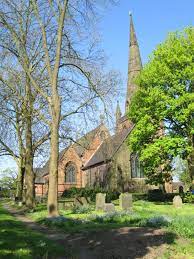
The "ancient redstone edifice" of St. Margaret's, Wolstanton, is a landmark in the Potteries, "seated on an eminence, its lofty spire forms a conspicuous feature in this part of the country." In 1863, a serious charge against the longtime vicar of the church excited considerable interest. 

The Rev John Tyson had been in Wolstanton for more than 25 years. One of a clergyman's duties was to sit with the sick and provide some spiritual comfort. Thus did the vicar spend many hours in the cottage of Mrs. Mary Ann Barlow whose mother was dying. Mrs. Barlow was a widow in her 30's; she'd been born in the village, her late husband had been a schoolmaster and local relief officer. She was quite a respectable woman. Mr. Tyson's regular calls continued until the death of her mother in September 1862.

A few days after Christmas, a letter arrived at the vicarage, signed by Mary Ann Barlow. As the letter formed the centerpiece of the case against Rev. Tyson, it is quite unfortunate that it did not survive. On that occasion, the vicar read it aloud, in the presence of his wife and his nephew. From memory, they all recalled words to the effect that "The secret's in and must come out. I should have sent this letter after the second offence, but I was afraid if I had done so you would refuse to visit my mother. Your ingratitude is very base, after my having endured this so long. I must be paid, and receive compensation for the loss of peace of mind which I have sustained. Oh, that it were with me as in days past, when I could attend church, and receive the sacrament with inward and spiritual grace." When she heard the letter read, Mrs. Tyson turned to her husband, "Why John, she means to accuse you of having improper intercourse with her."

On New Year's Day, Mrs. Barlow was taken into custody by a local plod who recalled she told him how she had to fight the vicar off. "He put his hand up my skirt but I pushed him away and resisted him." At the Police Court in Stoke, the woman was charged with extortion with threats, namely that the Rev. Tyson had attempted to commit a rape upon her person. 

Amidst a great deal of public interest and excitement, the case was heard in March at the Spring Assizes in Stafford. The Rev. Tyson, in his 60's and in delicate health, had lived a blameless and irreproachable life. Not a breath of scandal touched his name, his counsel told the court. On the stand, the vicar denied a litany of alleged improprieties. During his many visits, he never bolted the door in Mrs. Barlow's home, he never pulled down the blinds, he never sat on the sofa with the woman, she never sat on his knee, he never put his arm round her waist or up her skirt. He was never with her in her bedroom; he never pushed her down and lay with her on the bed. He never wrote to her begging that she not reveal his past wrongdoing.

What motivation would a respectable lady have for making such a horrible charge? In that lost letter, there was also mention that Mrs. Barlow had asked the vicar for a loan of £30 which he had refused. At that time, Mrs. Barlow, the accused, could not take the stand in her defense. Representing her was Henry Matthews Q.C., a future Home Secretary. He made a lengthy speech insisting that the "wrong construction" had been placed upon that letter. Her mother had just died, she was in great need, and her pastor and spiritual adviser for twenty years, her friend and consoler in time of trouble, and with whom for years she'd worked as a Sunday School teacher, refused to help her. After the letter was delivered, she went to the vicarage to see Mr. Tyson, but his solicitor turned her out. Matthews suggested to the jury that, had she been allowed to talk to the vicar - before her mouth was closed in the dock - she could have explained her situation and her despair and that she had never intended to impute anything reflecting upon his character.

Baron Channell admitted the jury had two very different versions of events. The letter had been “imprudently parted with” and, without it, its full contents were unknown. It was a serious charge against Mrs. Barlow; one that would come with a lengthy jail term if she was convicted. The jurymen, "after a brief consultation," acquitted her.  

The verdict left the entire sordid matter unresolved. In Wolstanton, 400 parishioners signed a statement offering their support to Mr. Tyson "for his considerable annoyance of late." Their confidence remained unabated in his ministry and character. In his grateful reply, the vicar admitted "the only consolation remaining to me is a clear conscience before my Almighty Master." The Rev. John Tyson remained at St. Margaret's, Wolstanton, until his death four years later. There is a memorial to his memory in the church today. 


For this Christmas, consider this collection of stories of Victorian clergymen and their predicaments.


Tuesday, September 14, 2021

"I Will Beat You No More"

St. Mary the Virgin, Flitcham


Flitcham is a small village in West Norfolk, "lying in a picturesque valley.” Sounds lovely but when the new vicar, the Rev. Bryan O’Malley, arrived in 1873, he came to an impoverished parish and his church of St. Mary the Virgin in a dilapidated condition. Flitcham is on the Sandringham Estate, then well known as the country seat of "Bertie," Prince of Wales. It infuriated O'Malley that his 'umble flock worshipped in a derelict pile while the Prince's splendid church (St. Mary Magdalene) was rarely used. Bertie's guests slept in on Sundays, exhausted from their “balls and dances, sporting and general frolicking and affected grandeur.” 

Not a man to suffer quietly, O'Malley badgered his Bishop, the local gentry and then, "a mad Irishman with a shillelagh," he walked hundreds of miles across East Anglia begging. By 1880, the needed repairs were made, "by the exertions of the present incumbent who literally tramped the country for the purpose."

Understandably, praise poured in for the doughty Rev. O’Malley. Alas, his private life was a disaster. In 1872, he had married Frances Keppel, a clergyman’s daughter. The Keppels, of course, were an historic Norfolk family of great achievements – in the church, the navy and in the peerage. Mrs. O'Malley would later claim that she and her husband quarreled from the outset of their marriage, usually about money. He was obsessed with raising funds for his church but not with feeding his growing family. The O'Malleys soon had several children, to the point the clergyman "prayed to God to give me no more." Their quarrels were frequently violent. Servants told stories of how husband and wife threw anything to hand at one another, knives, hot water, plates, even barnyard “detritus.” Mrs. O'Malley left him finally but returned when he promised in writing, "I will beat you no more." She even wrote the Bishop saying everything was going to be fine in Flitcham. Of course, it wasn't. The entente cordiale was, predictably, short-lived. A few months later, on 21 November 1880, after a night's snowfall, O'Malley ordered his wife and children to leave the vicarage. The five O'Malleys – without sufficient clothing for the weather, trudged several miles through the snow to the nearest church at Hillington where the rector, the Rev. Mr. Ffolkes, took them in. 

The public scandal had gotten out of hand. In 1881, Mrs. O'Malley sought a judicial separation. In Divorce Court, she described her marriage as "a story of continual ill-treatment with periods of happiness." She was supported by numerous witnesses, including some of the children. No witnesses came forward to defend Rev O’Malley who took the stand on his own behalf. He described their marriage as a "love match," which was greeted with laughter and jeers. He admitted to having “hot Irish blood” but his wife was an extremely difficult woman herself. She resented bitterly O'Malley's lowly position. She, after all, was a Keppel and he was nothing. But her marriage vows were clear: "for better or worse." On that snowy night, Rev O'Malley insisted he didn’t order his family away or lock the door behind them. He did not prevent them from getting proper winter cloaks. She left on her own. He heard her say, "Come along, children." She just wanted to put on a scene; it was more of her "airs." 

After the vicar's counsel closed his final argument, the jury foreman said they didn't need to hear from Mrs. O'Malley's Q.C. They had made up their minds: Mrs. Frances O’Malley had indeed been the victim of repeated acts of personal violence and was, in their opinion, deserving of the protection of a judicial separation and custody of her four children. Justice Hannen agreed and made the appropriate rulings.

The Rev Bryan O'Malley remained in Flitcham, alone in his vicarage, although his conduct became more and more eccentric. In 1898, he was arrested for being drunk in the streets of Kings Lynn. The following year, the Bishop of Norwich formally deprived him of his Flitcham benefice and "all its emoluments" (however meager). He died in 1909. His wife long outlived him; Frances O'Malley survived until 1931. 

Finally, we should note that Queen Elizabeth II has, on occasion, come across the fields from Sandringham to worship at the recently restored Flitcham Parish Church. What would old O’Malley have made of that? The story of the Rev O'Malley was previously published in Blame it on the Norfolk Vicar (Halsgrove 2008).

Thursday, August 19, 2021

As Mysterious as it is Tragical.


"A more secluded spot could hardly have been chosen," all were agreed when the bodies of the Rev Alfred Ernest Constable and his wife of just two months were discovered in Derbyshire. The sinuous River Derwent flows south through the county on its way to join the Trent. In Burley Hill, a village some little way north of Derby, Samuel Raines farmed some land running down to the Derwent. From his home, on Saturday, 22 June 1895, he saw something "black" on the bank but paid it no mind. Sunday morning, he put his field classes on it and decided to investigate. Farmer Raines came upon the body of a woman lying on the ground. She appeared to have been pulled out of the water and covered with a greatcoat; her head was resting on a clergyman's hat. The farmer went for a constable and the two men, believing "there's got to be a man around somewhere," soon located the second body, face down in about three feet of water. The bodies were taken by cart to the Red Cow public house in Allestree for an inquest. The story soon to be revealed was "as mysterious as it is tragical."

St. Mary's
Burley-in Wharfedale

The Rev. Mr. Constable was identified by a soaked packet of visiting cards found in his pocket. He was not yet thirty; he'd been ordained in 1890 after leaving university in Durham where he was an excellent and popular student, famous for his feats of athleticism, more remarkable because he had been totally blind since a childhood disease. He spent three years as a curate at St. Mary's, Burley-in-Wharfedale, near Leeds. He was then assigned to Thornton Watlass, a remote village in North Yorkshire but he returned to Burley frequently to continue his acquaintance Miss Mary Ellen Naylor, whose family of considerable means resided at Elmgrove. Mr. Constable was delighted then when he was called to be curate in Guiseley, Wharfedale, where by the rector of St. Oswald, he was married to Miss Naylor on 23 April 1895. They left for their honeymoon in the Channel Islands.

Whilst they were away, however, "the tongue of scandal had connected their names with indiscretion before marriage." The Bishop of Ripon had been presented with enough information to suspend the Rev. Mr. Constable and to expect the young clergyman to defend himself upon his return to the diocese.

The police determined the Constables spent their last night at an inn in Worcester and had purchased railroad tickets for Leeds but they got off the train in Derby. They walked up the Duffield Road and along the river until they found a suitable location. Near the woman's body on the bank were found two earthenware cups and an empty packet, the cover, in large red letters, read: INFALLIBLE VERMIN DESTROYER. Dr. Ernest Davis of Derby reported that the gentleman died from drowning, although he had taken some of the poison, made up mostly of strychnine. Perhaps he had fallen into the water. The woman died from the poison. She had been in the water but apparently carried out, placed on the bank and covered with the coat. There was great excitement when the doctor added that his postmortem further revealed that "had she lived, she would at no distant period have become the mother of a male child." She had been married just eight weeks.

The father of the deceased, also a clergyman, headmaster of Thorne Grammar School in Doncaster, had arrived. He described his son as given to fits of depression, but he had latterly seemed very happy. His wife seemed as happy as he was. The elder clergyman had never suspected Mary Ellen might have been in the family way. W Harvey Whiston, the coroner, declared it a pitiful tale. This young couple chose not to wait until their marriage and their "great trouble" would soon be made clear by her confinement. They could not face the scorn, the shame brought on their friends and the likely end of Rev. Constable's clerical career. Thus, they were induced to commit this rash act, with no evidence of careful advance planning. Therefore, he ruled their deaths were due to suicide during a state of temporary insanity. The jury followed Mr. Whiston's instructions. 

A short time after the inquest, the bodies of the Rev and Mrs. Constable were laid to rest in Allestree. The burial of suicides remained controversial; the verdict of "temporary insanity" allowed for some leniency. The services in Derbyshire were "of the quietest character," attended only by the dead man's father and two brothers of the late Mrs. Constable. She was 24.

NEW: Peter Grinham of the Burley Local History & Archive Group has kindly shared with me some new research on this double tragedy done by Andy Thurman of Allestree. Mr Thurman has an alternative theory. He believes this wasn't a double-suicide. "I think the strychnine was intended to induce a termination. Hence Mary Ellen was partly in the river. It went wrong and she died so (Rev Constable) committed suicide." Remember, however, two china cups were found at the scene. That doesn't rule out Thurman's theory. Mysterious and tragical it remains. There is more at https://www.facebook.com/groups/711412013140436/posts/751924715755832 

Saturday, July 31, 2021

The Besieged Clergyman


In the late 18th century, a guidebook to Kent asserted, “the village of Cowden has nothing worth notice in it.” The church of St. Mary Magdalene was described as tiny and “mean,” and the spire is “notably crooked.” The wealthy Harvey family of Tunbridge were longtime patrons of the church. Their son, the Rev. Thomas Harvey, became rector in 1785 and served fifty years until his death, followed by his son, a second Rev. Thomas Harvey who was the rector for another 43 years until his death in 1878. When the old rector finally shuffled off, in his will, he exercised his right as the parish patron, to present the rectory to his son, the Rev. Henry Gordon Harvey. The appointment was worth £600 a year. Such designations were, however, subject to the approval of the diocesan bishop. It was rarely a problem. Unfortunately, the Archbishop of Canterbury “absolutely refused” to even consider the Rev. Henry Gordon Harvey. 

Rev. Harvey, the son and grand-son of such respected men, had been educated at Trinity College, Cambridge and ordained in 1853. He never held any official church position during the 25 clerical years that passed while he waited for his father to die and to succeed to the family pulpit. Instead, he acquired some property and did a spot of gentleman farming on 130 acres near Godalming.

Part of the reason for the Rev. Harvey’s clerical inactivity was illness related. He had been very ill with fever in 1858, requiring constant care. It was then he met Martha Anne Bulbeck, a nurse from Brighton. As she nursed the young clergyman to health, they formed a romantic relationship which would lead eventually to three illegitimate children, only one still living at the time of this story. The Rev. Harvey and Martha were finally married, if quietly, at St. Dunstan’s in the West, Fleet Street, in 1869. Since the marriage, while residing in Godalming, they had three more children.

Following his father’s death, Rev. Harvey submitted the required particulars to the Archbishop. He presented the required written testimonials from four clergymen of the diocese. In response to some gossip, Rev. Harvey assured the Archbishop’s secretary that he had married his wife as soon as possible after their first “connexion.” He had most certainly not lived with his wife before that marriage and none of his children were illegitimate. Without a great deal of effort, these statements were found to be false. The Archbishop, the Most Rev. A.C. Tait, announced that he would refuse to permit the Rev. Mr. Harvey to become the rector of Cowden, citing the immoral life that he had led and his “misleading statements” regarding his marriage. 

Joined by his aged mother who stood by him, the Rev. Mr. Harvey sued the Archbishop in civil court. Under the Clergy Discipline Act of the day, any moral charges against a clergyman had to be brought within two years of the date of the alleged offense. His “offense” had taken place over ten years in the past and, certainly, he had purged that immorality by his marriage and blameless life since. Harvey conceded that he had kept that early relationship a secret to spare a blameless woman from disgrace. Harvey also presented a statement claiming the support of 94 out of the 100 parishioners of St. Mary Magdalene.

The church countered by calling two of the clergymen who had signed those testimonials. One of them, Rev. Harvey’s own cousin, testified that he had been misled. Had he known the truth he would not have written the letter. The case was heard without a jury by Lord Chief Justice Coleridge in 1879 who quickly found for the Church. 

The Rev. R. Abbey Tindall from Manchester was announced as the new rector of Cowden in 1880 but the handover did not go well. The Rev. Harvey left the rectory taking with him several “titles and other documents” the church wanted back. He refused to surrender them. By 1883, he was living in Dover, where he locked himself and his family in his home. Food was passed to them through a window. Harvey refused to admit the Sheriff of Kent who presented an order for that paperwork. “The besieged clergyman” wrote to the local papers warning that, should the authorities try to break in, he had “a revolver in readiness.” In 1884, a court upheld the tradition that an Englishman's home is his castle and the sheriff did not have the authority to break down doors and would have to find some other way to proceed. 

Somehow it was all settled. The Rev. Tindall spent many years in Cowden, “one of the most charmingly situated parishes in Kent.” The Rev. Henry Gordon Harvey died elsewhere in Kent in 1908.